“Simple, fair and impossible to avoid”

LVT is an annual, nationally determined, nationally collected, percentage tax, paid by the freeholder, on the open market value of all land with no exceptions.
Land Value Tax is:
Simple to understand - a tax on land value, not on homes and gardens like Council Tax.
Fair- those with most, pay most. 83% of us will pay less under LVT.
Impossible to avoid - you can't hide land in a tax haven and there are no exceptions!
Straightforward to implement.
Initially a replacement for existing taxes which are complex, unfair, and easy to avoid.
It can be done - it is in use elsewhere with no hassle.


Our contact page shows how you can help to promote Land Value Tax and tells you about us.
Media
One of our contributors has produced an article: “Why we need Land Value Tax” which may be downloaded here.
New visitor?
Please let your contacts know about this site by passing on a link: landvaluetax.co.uk.
Click on “Articles” in the top menu to find out all about LVT
What is LVT?
Please read our article: “What is LVT?”
Why do we need LVT?
We have lost faith in politicians and we have the most unfair distribution of wealth in Europe.
“The Norwegian government enjoys a high level of trust compared to other countries. I believe that is related to low inequality."
Trygve Slagsvold Vedum, Norwegian Minister of Finance, 23rd October, 2024.
Please read our article: “Why do we need LVT?”
This site
This site is a resource for anyone promoting Land Value Tax. It is not politically affiliated because LVT has supporters across the political spectrum.
Need more?
We have tried to keep things clear by using the fewest possible articles. However, we may have missed something or you may like something considered in more depth.
Please drop us a line if you have questions or if you would like us to provide additional articles.
What is the “value” that is used for Land Value Tax?
The value of anything is what someone will pay for it. The “open market value” of land (how much it would make if it came on the market) changes over time and depends on where it is and what it can be used for.
For more details please read our article: “What is LVT?”

Preparing for LVT
We propose that the government immediately begins “Preparing for LVT - getting the facts” because:
it can be done now, straight away, immediately,
it doesn’t require a manifesto commitment to implement LVT,
it can be done in a very short time - between one and two years,
it is not expensive - the resources and skills are available.
it provides the data for decisions to be made.
We can start laying the foundations for a fairer future!
Introducing LVT
The short video below (2 minutes) covers the key points about LVT. The remainder of the site goes into more details, answers common questions and responds to possible objections. We recommend reading the articles you can find by selecting the “About LVT” menu item at the top of this page. The site is best viewed full screen if you are using a PC.
Articles About LVT
The Good Vs. The Bad
Good Taxes
Simple, short and straightforward - you don't need to consult a lawyer to understand them.
Fair. They are progressive - those with most, pay most.
Impossible to avoid. Tax Avoidance Advisors can't get round them.
Land Value Tax is a good tax: simple, fair and impossible to avoid.
Bad Taxes
Complicated. Hundreds of pages long and requiring expert lawyers to understand them.
Unfair. They are regressive, like VAT and Council Tax, because they favour the wealthy by taking a larger share of income from those who are less well off.
Easy to avoid - that's why we have the world's largest tax avoidance industry and why the UK and its dependencies are the world's favourite tax havens.
Frequently Asked Questions
-
The freeholder pays the LVT, not the leaseholder.
-
Yes. There may be national or local supplements added to the LVT rate.
-
No. None.
Exceptions create loopholes. Loopholes generate avoidance. Loopholes generate "special cases". Loopholes create court cases. Loopholes become expensive. Lawyers Love Loopholes.
LVT is simple, fair and impossible to avoid - as long as there are no exceptions.
LVT generates tax revenue - governments decide on spending.
"Special cases" should not be considered when collecting tax - however, they can be considered when spending.
Examples:
Government might decide to subsidise sheep rearing on hill farms to compete with cheap lamb from New Zealand. It can do this with a subsidy, not with a tax exemption.
Government might want to encourage people to insulate their homes to reduce energy consumption and emissions. It can do this with a subsidy, not with a tax exemption.
-
Yes. LVT is payable on all land in the UK and on land outside the UK owned by UK citizens, residents or companies.
To prevent double taxation any property taxes you pay in Spain will be deducted from the LVT due.
The largest landholder in Scotland is Danish - he pays LVT on his Scottish estates in Denmark - not Scotland.
-
In general there are two types of taxes:
A regressive tax takes a higher percentage from those with the lowest earnings and with the lowest wealth.
A progressive tax takes a higher percentage from those with the highest earnings and with the highest wealth.
LVT is a progressive tax.
-
Almost all National Trust land has zero value because it is inalienable (it cannot be sold on the open market) and it has no commercial value.
The exception would be any land (whether or not under buildings) used for commercial purposes and subject to rent. In that case the value would be treated as if it was not inalienable and LVT would, be due - just as those living in National Trust properties currently pay Council Tax.They would no longer pay CT, the National Trust would pay LVT and may try to put up rent to cover it. If they try to put it up to more than CT (unlikely - outside the South East it will probably be less) tenants have the same choice as now: challenge it (and most likely win) or move.
Valuing is simple and done by the Valuation Office Agency (it has been valuing land for over 100 years and is now part of HMRC) The golden rule is simple: what would someone pay for this land at auction (the open market) given where it is and what it may be used for?
The German state of Baden-Württemberg has recently introduced LVT and they had some very short term challenges about values but that has settled down and everyone wonders what the fuss was all about!
Objections
Answering the most common objections
LVT is not a garden tax - Council Tax is a tax on homes and gardens.
LVT will not cause overdevelopment - our planning system prevents that.
LVT will not destroy farming, our food supply, our countryside or our wildlife -
our subsidy system will ensure that farmers are supported to do what we need.
Over 83% of us will pay less with LVT than we do with Council Tax.
Less than 1% of us will pay >10% more than we do with Council Tax.
LVT will be phased in over 10 years - there will be no sudden changes.
There will be plenty of time for the market to adjust.
Those who cannot pay any increase over Council Tax will have
the option to defer payment until the property is sold or transferred.
No-one will have to move home because of LVT.

Replacing Council Tax
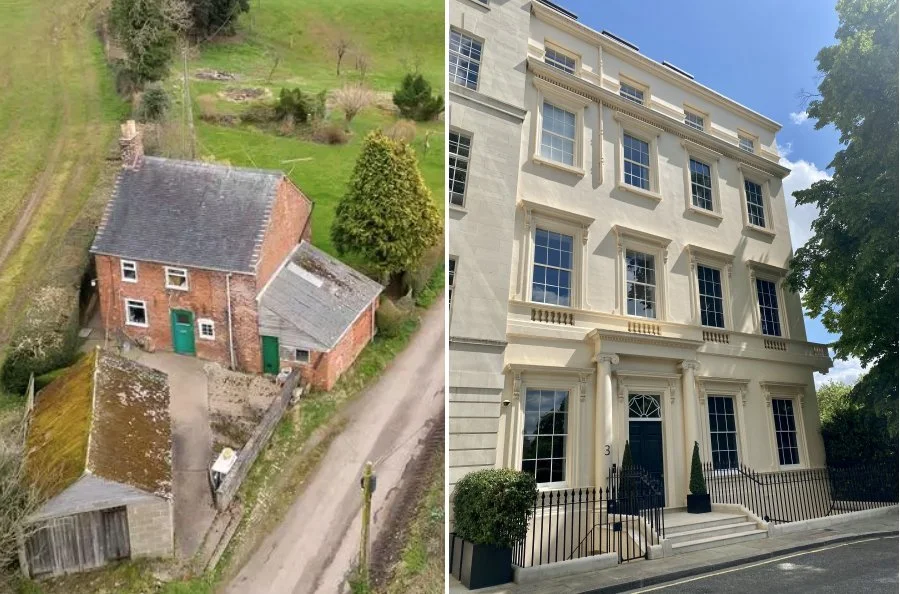
Council Tax isn’t fair. In 2024/25:
a dilapidated cottage in South Derbyshire on band D pays £2,158.
a band D home in Westminster pays £973.
a £95,000,000 mansion in Westminster on band H pays £1,946.
A £95 million mansion pays less than a dilapidated cottage!
LVT is fair – those with the most, pay the most.
LVT can replace Council Tax and Business Rates.
Local Authorities have lost over 40% of their funding since 2010 resulting in poor services and potholes!
LVT will ensure that Local Authorities receive 100% of the funds they need to provide the services we share.

January 2025
“The Holme” in Regent’s Park was on the market for £250 million and has been sold for £139 million.
It is on band H so pays £1,946 Council Tax.
You may like to check what band H pays in your area.
Why don't we have LVT now?
Over 80% of us will pay less with LVT than with Council Tax. About 1% will pay over 10% more than with Council Tax.
That 1% includes:
major landholders, including the aristocracy, whose land will be taxed for the first time,
those who have purchased land using Business Asset Rollover Relief or to avoid paying Inheritance Tax,
Property developers who have nothing to gain from bringing an end to the escalating cost of land.
All three groups have poured millions into political parties and MPs to ensure their interests are protected.
Should fear of the powerful 1% stand in the way of something that will benefit the majority?
LVT will be phased in over 10 years to enable people, and the property market, to adjust. There will be no sudden increase when LVT begins to be phased in and deferred payment will ensure that no-one will have to move home!
The experience of Norway
From a speech made in the USA by Trygve Slagsvold Vedum, the Norwegian Minister of Finance, on 23rd October, 2024.
"I am a farmer and politician ... it is an honor for me to speak about taxing the riches of nature and sharing the prosperity from natural resources.
Our constitution was written down in 1814, in it, we got rid of our nobility, and ensured sovereignty of the people. We secured national control of our assets, our natural resources, and later taxed the income from them, to benefit the whole Norwegian people.
The story of my nation has been greatly shaped by our natural resources and the opportunity to share their values with society as a whole - not just a lucky few.
This has made it possible for us to provide quality welfare services to our citizens. Free healthcare, free education and a safety net for those who are less fortunate in life. This has led to a generally low level of inequality in Norway. The Norwegian government enjoys a high level of trust compared to other countries. I believe that is related to low inequality."
Get in touch
If you’d like to share your LVT advantages, objections, questions, or simply want to say hello, use the button below to fill in the form and contact us.